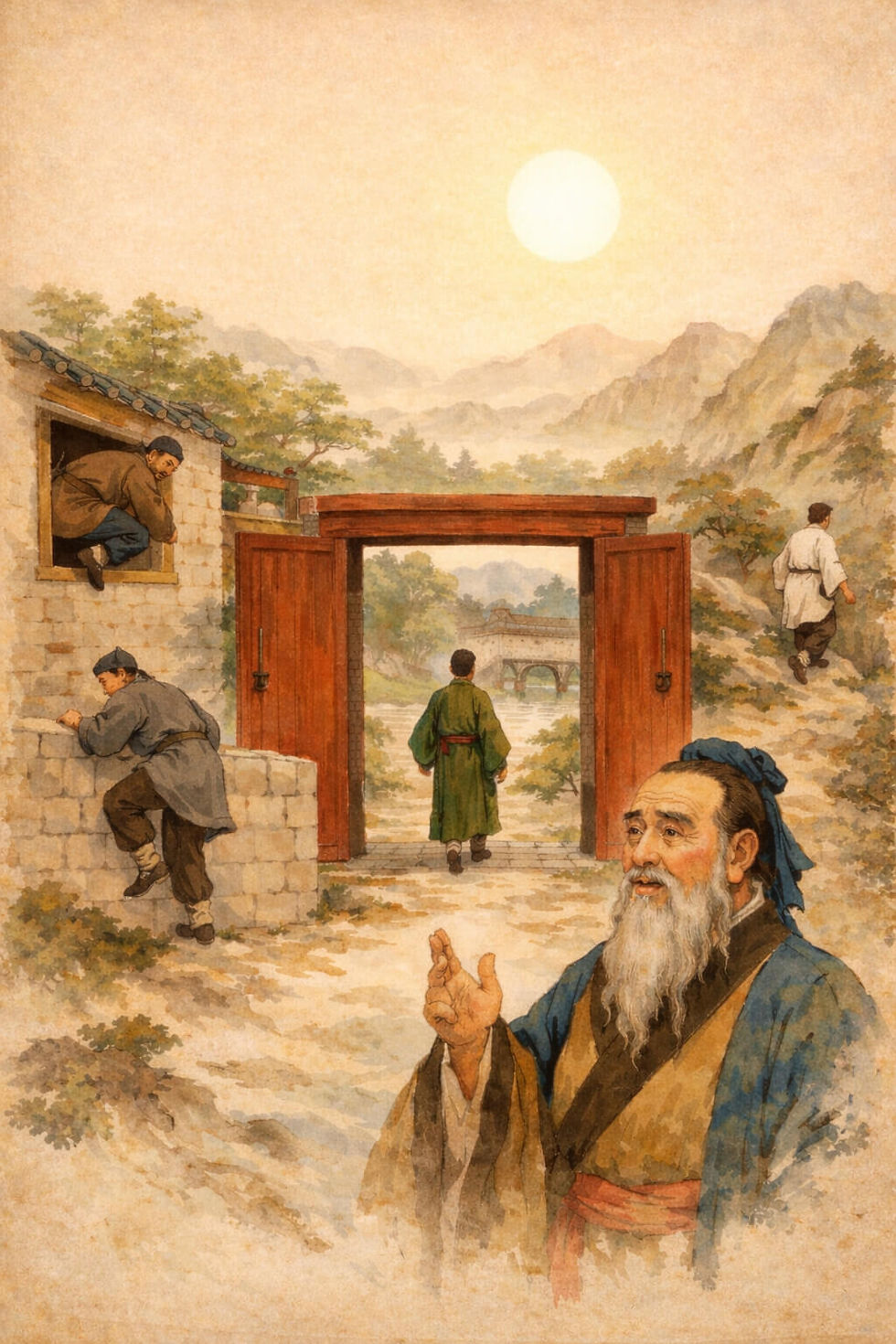
What Mount Spirit (靈山) Means in Buddhism
- Feb 5, 2024
- 2 min read
Updated: Mar 29
This blog explores the meaning of the Buddhist verse 佛在靈山莫遠求 and reflects on Mount Spirit (靈山) as a symbol of inner cultivation and awakening.

Have you ever searched for something sacred, only to realize it was never far away?
When I was young, I first heard this short Buddhist verse (佛偈) while watching a Chinese television drama. It was brief, almost simple. Yet something about it stayed with me. Over time, I came to see that it is not merely poetry. It is a quiet invitation to turn inward.
It says:
佛在靈山莫遠求,
靈山只在汝心頭,
人人有個靈山塔,
好向靈山塔下修。
The Buddhas dwell on Mount Spirit—do not search far.
This sacred mountain lies within your own heart.
Everyone has a sanctuary on the inner mountain.
Ground your practice in that place.
As a teenager, these lines felt mysterious to me. I recognized words like Buddha, mountain, and mind, but I did not yet understand what they were pointing to. A few years later, someone patiently explained the verse to me. After that, I could never read it in quite the same way.
The Meaning of Mount Spirit (靈山) in Buddhism
At its heart, this verse reminds us that what is sacred is not simply somewhere outside us waiting to be found. Mount Spirit is also an inward reality.
In the original Chinese, 心頭 is often translated as “heart” or “mind.” But here it suggests more than a physical place. It points to the inner source from which awareness arises. In that sense, the mind is not only where we think. It is also where cultivation begins.
Every sage and every Buddha began from this same place. They did not begin by searching outward. They began by turning inward.
This is why the verse feels so direct. It does not argue or explain at length. It simply points us back to the place where practice truly begins.
What we seek may not be far away after all.